
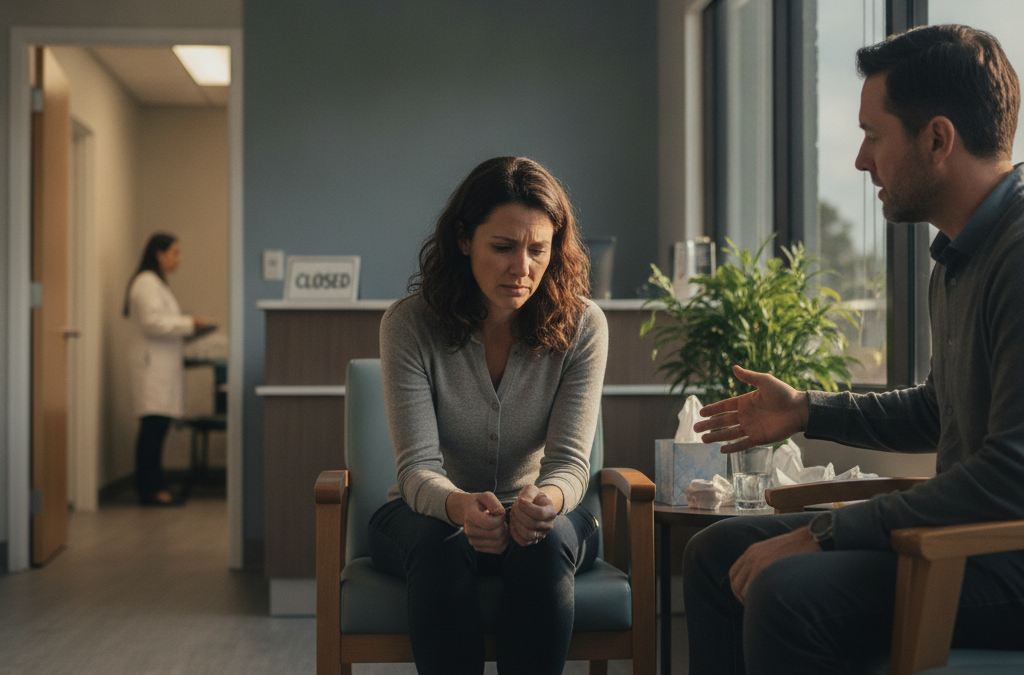
What Is Emotional Dysregulation After a TBI — and Why Are So Many Patients in Wesley Chapel and Land O’ Lakes Being Told It’s a Mental Health Problem Instead of a Brain Injury Symptom?
Emotional dysregulation after a traumatic brain injury is exactly what it sounds like: the brain’s ability to manage emotional responses has been disrupted by physical damage, not by a personality flaw or a psychiatric condition. Patients across Wesley Chapel, Land O’ Lakes, and the broader Tampa Bay area are regularly referred to counselors or started on antidepressants after a car accident or head injury — often without anyone ever performing a dedicated neurological evaluation. If you or someone you love has become suddenly irritable, emotionally unpredictable, or prone to outbursts since a head injury, this is a neurological symptom that deserves a neurological answer.
What Emotional Dysregulation After TBI Actually Looks Like
This is one of the most misunderstood symptoms in TBI recovery, and it is almost completely absent from the websites of most local neurology and spine clinics in the Tampa area. The condition is not simply feeling sad or stressed after an accident — it involves changes in how the brain itself generates and regulates emotional responses at a neurological level.
Common presentations include:
- Sudden, intense anger or frustration that feels disproportionate to the situation
- Rapid mood shifts — feeling fine one moment and overwhelmed minutes later
- Emotional lability: laughing or crying unexpectedly, sometimes without a clear trigger
- Increased impulsivity and difficulty filtering emotional reactions before acting on them
- Heightened anxiety or irritability in noisy, crowded, or high-stimulation environments
- Difficulty tolerating frustration that was manageable before the injury
These symptoms frequently emerge in the days to weeks following a traumatic brain injury, but some patients — particularly those who sustained injuries in rear-end collisions on routes like I-275 or in high-speed accidents on the highways feeding into New Tampa and Wesley Chapel — do not notice the full pattern until they are back at work or interacting with family in their normal environment.
Why This Gets Mislabeled as Anxiety, Depression, or Personality Change
Here is the problem: emotional symptoms after an injury are real, but the question that rarely gets asked is why those symptoms are occurring. When a patient presents to a primary care physician or an emergency department with irritability and mood instability following a head injury, the path of least resistance is often a mental health referral or a prescription for an SSRI. That may provide some short-term relief, but it does not address the underlying neurological disruption.
The prefrontal cortex and limbic system — the areas of the brain most involved in emotional regulation — are among the most vulnerable to traumatic brain injury. Damage to white matter pathways, diffuse axonal injury, or microhemorrhages in these regions can directly impair your brain’s capacity to filter and modulate emotional responses. This is a structural and functional issue, not a psychological one, and it requires evaluation by a physician trained in both neurology and neuroimaging to identify properly.
Many patients in Pasco County and Hillsborough County are bouncing between primary care, behavioral health, and general neurology without ever getting the kind of focused, injury-specific neurological workup that could actually explain what is happening inside their brain.
What a Proper Neurological Evaluation Looks Like for This Symptom
If you are experiencing emotional dysregulation following a head injury, the evaluation should go beyond a standard office visit. A thorough neurological assessment for post-TBI emotional symptoms includes a detailed injury history and timeline, a cognitive and neurological examination, and — critically — appropriate neuroimaging. Standard CT scans taken in the emergency room will miss the vast majority of findings associated with mild and moderate TBI. Advanced MRI sequences, including diffusion tensor imaging (DTI), can reveal white matter changes that standard imaging does not capture.
At Advanced Brain & Spine in Tampa, Dr. Saldin brings a specific combination of training that is directly relevant here: Duke-trained neurology, board certification in pain medicine from the University of Virginia, and a specialization in neuroimaging. That means when you come in describing mood instability and emotional reactivity after an accident, you are being evaluated by someone who understands both the neurological mechanisms involved and how to image the brain accurately enough to find what a routine scan might miss. Learn more about Dr. Saldin’s background and clinical approach.
Why This Gap Matters — and What Competitors Are Missing
A review of content from local neurology and spine clinics in the Tampa Bay area reveals a consistent pattern: these practices address physical TBI symptoms — headaches, dizziness, neck pain — but almost none of them dedicate meaningful content to the emotional and behavioral sequelae of brain injury. Patients searching for answers about why they feel emotionally unrecognizable since their accident are not finding those answers from local specialists. They are finding generalized mental health content that does not address the neurological root cause.
This matters clinically, but it also matters practically. Patients who are injured in motor vehicle accidents in Wesley Chapel, Land O’ Lakes, or Lutz often have active personal injury claims or are working with an attorney on a lien-based care arrangement. Emotional dysregulation — when properly documented as a neurological TBI symptom — is a meaningful component of that injury picture. When it is mislabeled as a pre-existing mental health condition or left undocumented, it may not be attributed to the accident at all, which can significantly affect the outcome of a claim.
Treatment Options That Address the Neurological Component
Once a thorough evaluation confirms that emotional dysregulation is linked to the brain injury, there are several treatment pathways worth understanding:
- Neurologically-guided medication management: When medication is appropriate, it should be selected and monitored by a neurologist who understands TBI pharmacology — not as a default first step, but as one tool among several.
- Hyperbaric oxygen therapy (HBOT): HBOT has emerging evidence supporting its role in TBI recovery by promoting neuroplasticity and tissue repair in damaged brain regions. For patients with documented TBI and associated emotional symptoms, this can be a meaningful part of a broader recovery plan. Read more about hyperbaric oxygen therapy for TBI at Advanced Brain & Spine.
- Coordinated care with behavioral health: Therapy absolutely has a role — but it works better when it is coordinated with neurological care, not positioned as the only answer. A neurologist who understands TBI can communicate with your therapist or counselor so that both sides of your care are working from the same understanding of what happened to your brain.
- Ongoing neurological monitoring: Emotional symptoms after TBI can evolve over months. Recovery is rarely linear, and a specialist who tracks your progress over time is better positioned to adjust your care plan as your brain heals.
Frequently Asked Questions
Can emotional dysregulation appear weeks after a TBI, even if I felt okay right after the accident?
Yes. Delayed onset of emotional symptoms is common, particularly with mild to moderate TBI. The brain’s compensatory mechanisms can mask some symptoms initially. As cognitive demands increase — returning to work, managing a household, navigating daily stress — the underlying dysregulation often becomes more apparent. This is especially true for patients who had high-functioning baselines before their injury.
Will a standard MRI or CT scan show what is causing my emotional symptoms?
Often, no. Conventional imaging misses the microstructural white matter changes most associated with TBI-related emotional and cognitive symptoms. Advanced neuroimaging sequences such as diffusion tensor imaging (DTI) are better suited to detecting these changes. This is one reason why the imaging ordered and interpreted matters as much as whether imaging was done at all.
I was referred to a psychiatrist after my accident. Should I also see a neurologist?
If your emotional symptoms followed a head injury — even one that seemed minor at the time — a neurological evaluation is appropriate and should happen in parallel with, or before, a psychiatric referral. A neurologist specializing in TBI can determine whether the symptoms have a structural brain basis, which shapes the entire treatment approach.
Does emotional dysregulation after TBI count as part of my injury for a personal injury claim in Florida?
It can, when properly documented by a neurologist as a TBI sequela. Florida’s no-fault PIP coverage addresses initial medical costs, but documented neurological sequelae — including emotional and behavioral changes — can be relevant to a broader personal injury claim. Proper neurological documentation from the outset matters significantly here. Many patients coming to us from Wesley Chapel, Land O’ Lakes, and the surrounding Pasco County area are working with attorneys on exactly this kind of case.
Is there a treatment that can actually help rewire the emotional regulation pathways in the brain after a TBI?
Neuroplasticity — the brain’s ability to reorganize and repair itself — is real, and several of the treatment approaches used in TBI recovery, including hyperbaric oxygen therapy, are designed to support it. Full recovery to pre-injury baseline is not guaranteed for every patient, and anyone telling you otherwise is overpromising. But meaningful improvement is achievable for many people, especially with early, accurate diagnosis and a treatment plan that targets the neurological cause rather than just the surface-level symptoms.
You Deserve an Evaluation That Takes the Whole Injury Seriously
If you have been struggling with emotional changes since a head injury — and you have been told it is anxiety, stress, or just part of adjusting to life after an accident — you may not have gotten the full picture yet. A neurological evaluation that includes the right imaging and the right clinical expertise can change what you understand about your own recovery.
Advanced Brain & Spine serves patients throughout Tampa, Wesley Chapel, Land O’ Lakes, Lutz, New Tampa, and the surrounding communities of Hillsborough and Pasco County. Dr. Saldin’s training in neurology, neuroimaging, and pain medicine means your evaluation goes beyond a surface-level assessment. Request a consultation today and take the first step toward understanding what is actually happening — and what can be done about it.