
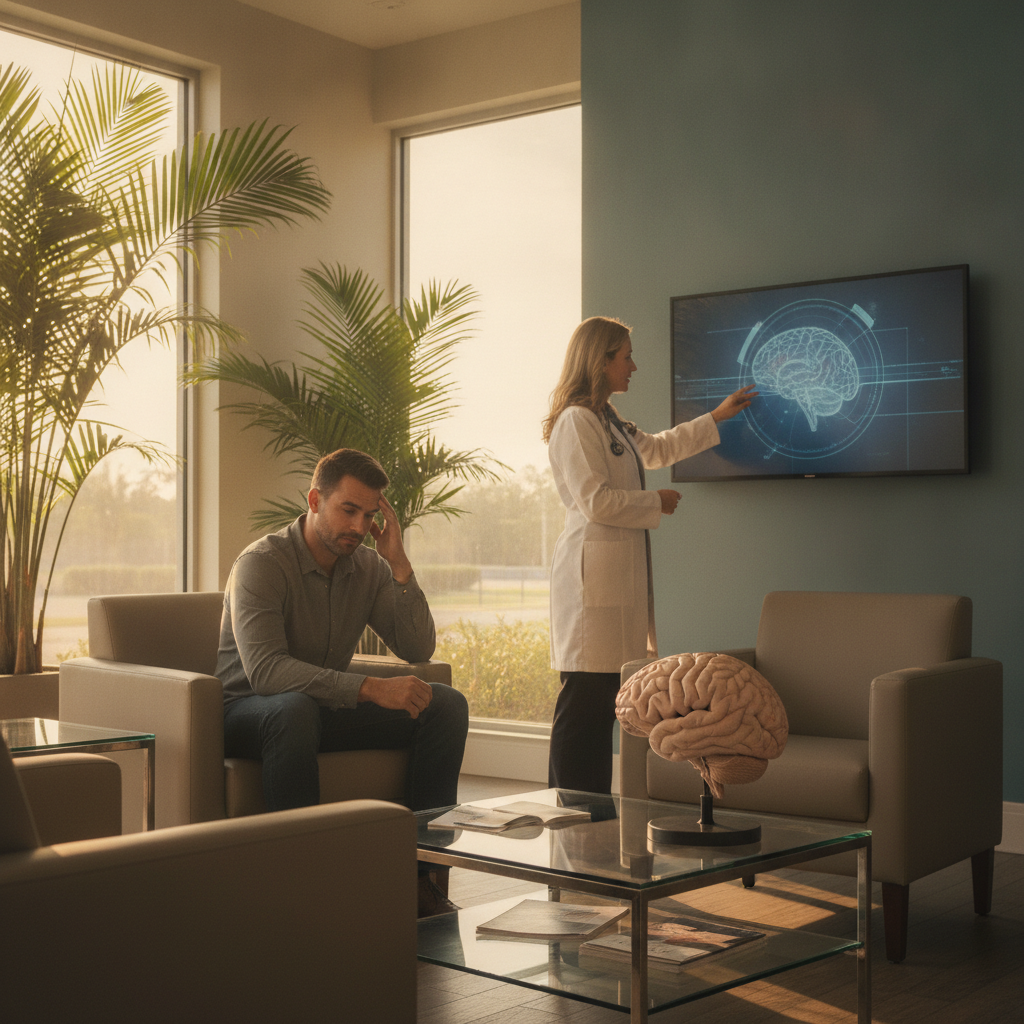
What Is Post-Concussion Syndrome — and Why Are So Many Patients in St. Petersburg and Pinellas County Still Suffering Months After a Head Injury?
If you had a concussion weeks or months ago and you’re still dealing with headaches, brain fog, mood changes, or trouble sleeping, you are not imagining it — and you are not alone. Post-concussion syndrome (PCS) is a real, diagnosable condition that affects a significant portion of people who sustain even mild head injuries. Yet in the Tampa Bay area, including St. Petersburg and across Pinellas County, many patients are discharged from urgent care or the emergency room with little more than a “rest and wait” instruction — and no follow-up plan if symptoms persist. That gap in care is exactly why so many people end up suffering far longer than they should.
What Exactly Is Post-Concussion Syndrome?
Post-concussion syndrome refers to a cluster of symptoms that continue beyond the expected recovery window after a concussion. Most people recover from a straightforward concussion within one to four weeks. When symptoms persist beyond that — typically defined as three months or more, though the timeline can vary — that’s when the diagnosis of PCS comes into play.
What makes PCS particularly frustrating is how wide-ranging the symptoms can be. Some patients experience primarily physical symptoms, while others struggle more with cognitive and emotional ones. Common presentations include:
- Persistent or recurring headaches, including migraines
- Difficulty concentrating or finding words
- Memory problems that seem to have appeared after the injury
- Sensitivity to light or noise
- Sleep disruption — either too much or too little
- Irritability, anxiety, or low mood that feel out of character
- Dizziness or a sense of imbalance
- Fatigue that doesn’t improve with rest
Here’s what most patients aren’t told: PCS is not simply the lingering presence of a bruised brain. It involves real, measurable disruptions to brain function, neural connectivity, and sometimes autonomic regulation — meaning your brain’s ability to manage things like heart rate, blood pressure, and stress responses. Without a thorough neurological evaluation, these disruptions often go undetected on standard imaging, which leads patients to be told nothing is wrong when something clearly is.
Why Standard Imaging Often Misses Post-Concussion Syndrome
This is the critical gap that most competitor clinics in the area don’t address clearly enough: a routine CT scan or even a standard MRI will frequently come back normal in patients with post-concussion syndrome. That doesn’t mean your brain is fine. It means those tools aren’t sensitive enough to capture the kind of functional and microstructural changes that PCS involves.
A neurologist who specializes in neuroimaging — including more advanced techniques — can look beyond a standard scan and evaluate patterns that reflect how your brain is actually functioning. This is a meaningful difference between getting a proper evaluation and being sent home with a clean CT and no answers. Head injury evaluation at Advanced Brain & Spine is built around this more thorough approach to diagnosis, not a one-size-fits-all imaging checklist.
Dr. Saldin, who trained at Duke University in neurology and completed board certification in pain medicine through the University of Virginia, brings specific expertise in neuroimaging and brain injury — which matters when standard tools are telling you nothing while your symptoms tell you otherwise.
How Is Post-Concussion Syndrome Properly Diagnosed?
A proper PCS evaluation goes well beyond reviewing an imaging report. It should include a detailed clinical history of the injury — including how it happened, what symptoms appeared immediately, and how they’ve evolved over time. It should also involve a comprehensive neurological examination and, depending on findings, more targeted testing.
Some of what a thorough evaluation might include:
- A structured interview about symptom onset, severity, and triggers
- Cognitive testing to evaluate memory, processing speed, and attention
- Vestibular and balance assessment if dizziness is present
- Review of any prior imaging with attention to findings that might have been minimized
- Discussion of how the injury occurred — whether it was a motor vehicle accident, a fall, a sports collision, or another event
For patients in St. Petersburg, Clearwater, and across Pinellas County, getting this level of evaluation often means driving across the bridge to Tampa — which many patients do when they realize their local urgent care or ER visit left too many questions unanswered.
Who Is Most at Risk for Developing Post-Concussion Syndrome?
Not everyone who sustains a concussion develops PCS, but certain factors make it more likely. You may be at higher risk if:
- You had a prior concussion or head injury before the current one
- You experienced a loss of consciousness or significant confusion immediately after the injury
- You have a history of migraines, anxiety, or depression
- You were in a high-impact motor vehicle accident and may have also sustained whiplash or cervical spine involvement
- You did not receive appropriate rest or monitoring in the days following the injury
- You returned too quickly to work, school, or physical activity before symptoms resolved
The Tampa Bay region has one of the highest rates of motor vehicle accidents in Florida, and a meaningful percentage of those accidents involve head injuries — many of which are never formally evaluated beyond an ER visit. For patients along corridors like I-275 or the Howard Frankland Bridge who were involved in a collision, the combination of head and neck trauma significantly complicates recovery and increases PCS risk.
What Treatment Options Are Available for Post-Concussion Syndrome?
There is no single treatment for PCS — which is exactly why personalized care matters. The right approach depends on which symptoms are most prominent and what’s driving them. Treatment is not about waiting longer; it’s about actively addressing the specific mechanisms causing your symptoms.
Options that may be part of a PCS treatment plan include:
- Targeted headache management: Including medication protocols specific to post-traumatic headache rather than standard migraine treatments, which often perform differently in this population
- Vestibular rehabilitation: For patients with ongoing dizziness or balance issues related to the injury
- Cognitive support strategies: Structured guidance on managing mental fatigue, memory, and focus while recovery continues
- Cervical spine evaluation and treatment: Because many concussions — especially those from car accidents or falls — are accompanied by neck injury that independently contributes to headaches and neurological symptoms
- Hyperbaric oxygen therapy: An emerging supportive option that some patients with persistent post-concussion symptoms have found beneficial; it works by delivering concentrated oxygen under pressure to support cellular repair and reduce neuroinflammation. Learn more about hyperbaric oxygen therapy for TBI and brain injury at Advanced Brain & Spine.
- Mood and sleep support: Addressing the emotional and sleep components of PCS is not secondary — it is often central to the recovery process
What About Insurance After a Head Injury in an Accident?
If your concussion or head injury occurred in a car accident, Florida’s no-fault PIP insurance should cover a portion of your initial evaluation and treatment regardless of who was at fault. However, PIP coverage has limits, and if your symptoms are persisting, your case may require documentation that goes beyond what a basic ER visit generates. Patients with attorney representation often access care through a letter of protection (LOP) arrangement, which allows treatment to proceed while a claim is pending. Advanced Brain & Spine works with patients navigating these insurance situations — and a thorough, documented neurological evaluation is often one of the most important pieces of a complete injury claim.
Frequently Asked Questions About Post-Concussion Syndrome
How long can post-concussion syndrome last?
It varies significantly by person. Many patients with PCS recover within three to six months with appropriate care. A smaller percentage experience symptoms for a year or longer, particularly if the injury was severe, if there was prior head injury history, or if treatment was delayed or inadequate. Early, targeted evaluation generally leads to better outcomes.
Can I have post-concussion syndrome even if my MRI was normal?
Yes. A normal MRI is common with PCS. Standard imaging looks for structural damage, not functional changes. Many patients with real, ongoing symptoms from a concussion have unremarkable routine imaging. This is one of the most important reasons to see a neurologist with brain injury expertise rather than relying solely on imaging results.
Is there a neurologist near St. Petersburg or Clearwater who specializes in post-concussion syndrome?
Advanced Brain & Spine is based in Tampa and sees patients from across the Tampa Bay area, including Pinellas County. If you’re in St. Petersburg or Clearwater and haven’t gotten clear answers about your ongoing concussion symptoms, a consultation at our clinic is a reasonable next step.
What’s the difference between a concussion and post-concussion syndrome?
A concussion is the initial brain injury event. Post-concussion syndrome is the diagnosis given when symptoms from that injury persist beyond the expected recovery period — typically three or more months. Not everyone who has a concussion develops PCS, but it’s more common than many patients are told, particularly after high-impact injuries.
Can neck injury cause or worsen post-concussion syndrome symptoms?
Absolutely, and this is frequently overlooked. Cervicogenic headaches — headaches originating from the neck — can mimic or compound post-concussion headaches. Whiplash injuries sustained in the same accident as a concussion can independently produce many of the symptoms associated with PCS, including headaches, dizziness, and cognitive disruption. Properly evaluating both the brain and the cervical spine is essential after a combined head and neck injury.
You Deserve More Than a “Wait and See” Approach
If you’re still dealing with symptoms weeks or months after a head injury — and you haven’t gotten a clear explanation or a real treatment plan — that’s not something you should simply accept. Post-concussion syndrome is a recognized, treatable condition, and there is no benefit to waiting longer without proper evaluation.
Advanced Brain & Spine serves patients from St. Petersburg, Clearwater, and across Pinellas and Hillsborough counties who need thorough, specialist-level neurological care after a head injury or accident. Dr. Saldin’s background in Duke-trained neurology and board-certified pain medicine means you’re getting a clinician who understands both the neurological complexity of brain injury and the practical realities of recovery. Request a consultation today and get the answers you’ve been waiting for.